


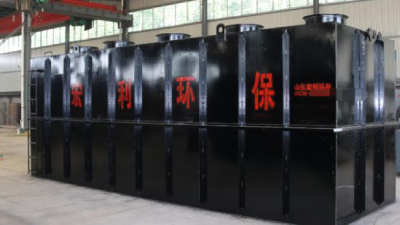

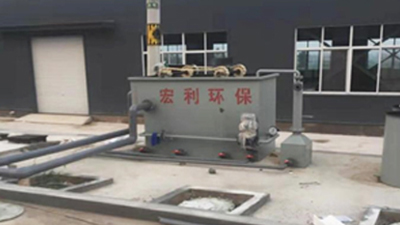
On November 15, China Central Television (CCTV), in its Financial Investigation program, exposed recurring cases of illegal construction waste dumping in areas surrounding cities and in rural communities.
One of the cases involved a government-approved disposal site under construction in Hengxi Village, Caozhai Town, Jindong District, Jinhua City, Zhejiang Province. The site was originally authorized to accept excavated soil and earthwork materials only. However, it was reportedly found to have accepted large quantities of construction waste illegally, while also encroaching on permanently protected basic farmland.
On the evening of the broadcast, the Jindong District government established a joint investigation team involving housing and urban-rural development, agriculture and rural affairs, natural resources, and local authorities. A comprehensive investigation and rectification process was initiated, with further action to be taken in accordance with the findings and applicable regulations.
Why do illegal dumping incidents continue to occur? And how can household waste in rural areas and townships be managed in a standardized and environmentally responsible manner?
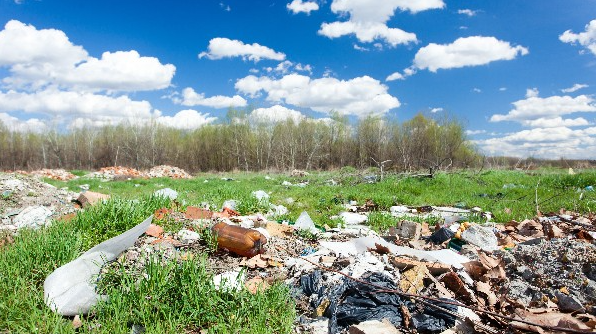
This incident once again highlights a common challenge in urban and rural solid waste management. As farmland protection requirements become stricter and rural environmental improvement continues, finding compliant, environmentally sound, and practical waste treatment solutions has become an increasingly important priority for many local communities.
In recent years, small-scale municipal solid waste treatment equipment based on high-temperature pyrolysis and gasification technology has emerged as a potential solution for decentralized waste treatment in rural and township areas.
According to CCTV, the disposal site involved in the incident was planned to cover approximately 230 mu (about 15.3 hectares) and was authorized to receive excavated soil only. However, the site contained materials such as red bricks, concrete blocks, and broken tiles, which clearly fell outside its approved scope of operation. On-site verification by the reporter also confirmed that the site had encroached on permanently protected basic farmland.
As early as 2023, Zhejiang Province introduced a set of 20 measures to strengthen farmland protection. These measures require strict implementation of the farmland occupation-compensation balance system, including the principle of providing replacement farmland before occupying existing farmland.
Article 17 of China's Regulations on the Protection of Basic Farmland also explicitly prohibits any organization or individual from storing solid waste or conducting other activities that damage basic farmland within designated basic farmland protection areas.
Illegal dumping can occupy valuable farmland and potentially contaminate soil and water resources. Traditional open dumping and simple landfilling methods also have limitations, including the risk of secondary pollution from leachate and their inability to achieve effective waste reduction and resource recovery.
With the continued advancement of the "Zero-Waste City" initiative and rural revitalization strategies, extensive and poorly managed waste disposal methods are increasingly unable to meet current environmental and regulatory requirements. There is a growing need for compliant, efficient, and locally adaptable waste treatment solutions.
Among various solid waste treatment technologies, high-temperature pyrolysis and gasification has attracted increasing attention due to its potential for effective waste reduction, controlled treatment of pollutants, and manageable secondary environmental impacts.
It is particularly relevant to small and medium-sized towns and rural communities where decentralized, on-site waste treatment may be more practical than transporting waste over long distances to centralized facilities.
Unlike conventional direct-combustion incineration, high-temperature pyrolysis and gasification adopts a staged treatment process combining oxygen-deficient pyrolysis with high-temperature secondary combustion.
During the initial stage, organic components in the waste are thermally decomposed under oxygen-deficient conditions, producing combustible gases. These gases are then directed into a secondary combustion chamber for further high-temperature combustion. Proper control of combustion conditions helps reduce the formation of harmful substances, including dioxins.
Small-scale municipal solid waste treatment systems typically feature modular configurations and relatively compact footprints. Their capacity, process design, and environmental protection systems can be customized according to local waste volumes, waste composition, site conditions, and applicable emission standards.
This makes them a potential equipment option for decentralized household waste treatment at county, township, and village levels.
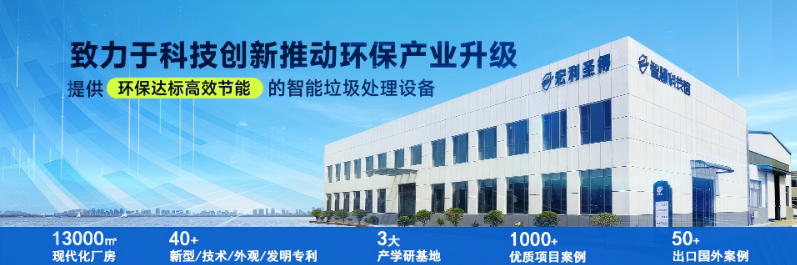
Founded in 2014, Zhucheng Hongli Shengde Environmental Technology Co., Ltd. (HOLY SHIELD) is a high-tech enterprise and a Shandong Province "Specialized, Sophisticated, Distinctive and Innovative" SME.
The company has long focused on the research, development, and manufacturing of municipal solid waste incinerators and solid waste treatment equipment, with more than 40 patents.
Its core 3T+E high-temperature pyrolysis and gasification technology has been included in China's National Science and Technology Achievements Database. The company has also participated as a contributing organization in the development of the group standard Design and Manufacturing Specification for Small-Scale High-Temperature Pyrolysis and Gasification Furnaces for Municipal Solid Waste.
In terms of process parameters, the technology is designed to maintain flue gas in the secondary combustion chamber at temperatures above 850°C, typically within a range of 850–1,200°C, with a residence time of at least two seconds. These conditions support the effective decomposition of harmful substances.
The system operates under negative pressure. According to the company's published technical information, the process does not generate tar or wastewater during normal operation, and the volume of residue after incineration accounts for no more than 5% of the original waste volume. The remaining residue can be disposed of through compliant landfill facilities or considered for resource recovery, subject to its characteristics and applicable regulations.
According to China Daily, HOLY SHIELD delivered a municipal solid waste pyrolysis treatment project in Dulan County, Qinghai Province, at an altitude of 4,099 meters. The project obtained a Pollutant Discharge Permit, and the measured dioxin emission concentration was approximately 0.035 ng TEQ/Nm³.
This project provides an engineering reference for waste treatment in high-altitude and cold-climate regions.
The construction and operation of a solid waste treatment project require more than reliable equipment. They also involve multiple stages, including project planning, environmental impact assessment, construction, commissioning, and acceptance.
HOLY SHIELD provides integrated services covering project planning and design, equipment manufacturing, installation, commissioning, and project acceptance support. The company also has experience in feasibility study preparation, environmental impact assessment procedures, project approval, equipment construction, and acceptance processes.
Based on the specific conditions of each project, HOLY SHIELD can develop customized waste treatment solutions to address different waste volumes, site requirements, operating conditions, and environmental standards.
Small-scale municipal solid waste treatment systems have been deployed in multiple regions across China, serving local housing and urban-rural development authorities, enterprises, and public institutions. The company's products have also been exported to various countries and regions.
Projects are operating in locations including Qinghai, Liaoning, Tibet, Inner Mongolia, and Yunnan. Depending on the configuration, equipment can also be equipped with systems such as automatic feeding and sealed material-loading mechanisms, helping simplify operation and making the equipment more accessible to local operators.
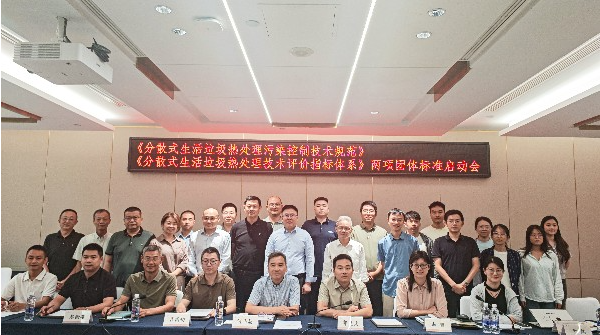
The rapid response and corrective measures following the Jinhua incident demonstrate the importance that regulatory authorities place on addressing illegal solid waste disposal. The case also serves as a reminder to the entire industry that regulatory compliance must remain the top priority in waste treatment, with strict adherence to environmental protection requirements and farmland conservation regulations.
For local governments and project developers, selecting proven treatment technologies, working with experienced equipment suppliers, and establishing effective operation and management systems are essential to addressing the challenges of growing waste volumes in towns and rural communities.
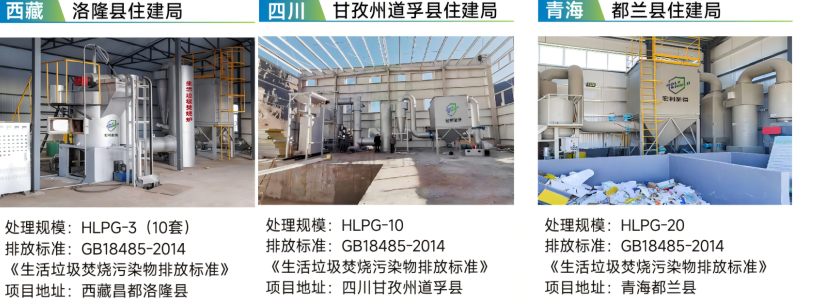
Small-scale municipal solid waste treatment equipment based on high-temperature pyrolysis and gasification offers a practical option for decentralized waste treatment. By supporting waste reduction and controlled, environmentally responsible disposal at the point of generation, such systems can contribute to the transition toward more sustainable municipal solid waste management.
As technology continues to advance and environmental supervision becomes more comprehensive, more regions are expected to explore waste management models suited to their local conditions, helping protect farmland, improve rural environments, and support the development of "Zero-Waste Cities" and rural revitalization.
Our Location:Hengliu Road, Economic
Development Zone, Zhucheng, Weifang, China
Mail Address:holyshield888@gmail.com


