

As China continues to improve living environments and advance the environmentally sound treatment of solid waste, centralized waste treatment facilities have become widely available in urban areas. However, domestic waste management remains challenging in cold, high-altitude regions, remote villages, scenic areas, camps and overseas project sites, where geography and limited transport infrastructure restrict access to centralized services.
Long transport distances make waste collection and transfer costly. Low temperatures and reduced oxygen availability place demanding requirements on treatment equipment. Scattered populations may also make large centralized facilities impractical, while inadequately managed landfills can pose risks to soil and groundwater. These conditions create a need for decentralized waste treatment technologies adapted to local operating conditions.

In line with applicable solid waste management policies and rural living environment improvement initiatives, on-site waste reduction and environmentally sound treatment can offer a practical approach for sparsely populated areas with limited transport access.
Small-scale waste treatment systems can reduce civil construction requirements and shorten project delivery times compared with large centralized facilities. With appropriate planning and supporting infrastructure, they can help address gaps in local waste management and support solutions tailored to regional needs.
Conventional waste incinerators may experience insufficient combustion air, incomplete combustion, difficult cold-weather starts and reduced reliability when operated in high-altitude, cold environments.
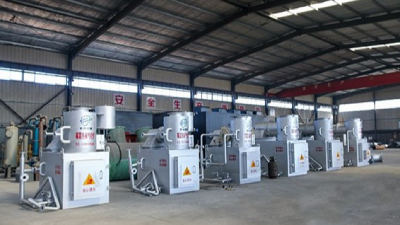
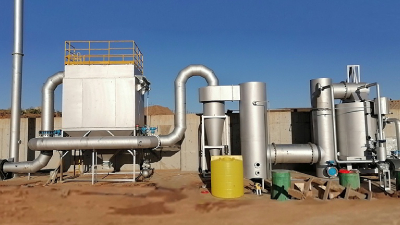
High-altitude domestic waste incinerators are designed with air supply and combustion systems adapted to low atmospheric pressure and cold conditions. Properly configured and operated, these systems can support reliable ignition, stable combustion and effective waste volume reduction. Integrated flue gas treatment systems help control emissions to meet applicable local requirements.
Incineration substantially reduces the volume of domestic waste. The remaining bottom ash and residues from flue gas treatment must be managed separately in accordance with applicable regulations. Where permitted and technically suitable, some residues may be recovered or reused. Local treatment can reduce the need to transport untreated waste over long distances, although residual waste still requires appropriate management.
Small-scale rural waste incinerators are particularly suited to decentralized applications where waste volumes and site conditions justify local treatment.
In remote villages, households are often widely dispersed and daily waste generation is relatively limited. Appropriately sized equipment can serve individual villages or groups of nearby communities without requiring a large centralized treatment facility.
In high-altitude scenic areas, visitor numbers and waste volumes can fluctuate considerably. Local treatment can help prevent waste accumulation and support the protection of sensitive natural environments.
At camps and project sites, timely treatment of domestic waste can reduce storage requirements and the environmental impacts associated with prolonged accumulation.
These systems can also be considered for overseas domestic waste treatment projects, particularly at remote locations where access to established waste management infrastructure is limited.
Automated controls and a clear operating interface can simplify routine operation and reduce the workload on site personnel. Staffing and supervision requirements should nevertheless be determined by the equipment configuration, operating procedures and local regulations.
An integrated flue gas treatment system, together with appropriate monitoring and maintenance, is essential for emissions control. Cold-weather design measures can improve equipment reliability during winter and support year-round operation when suitable utilities, maintenance arrangements and operating conditions are available.
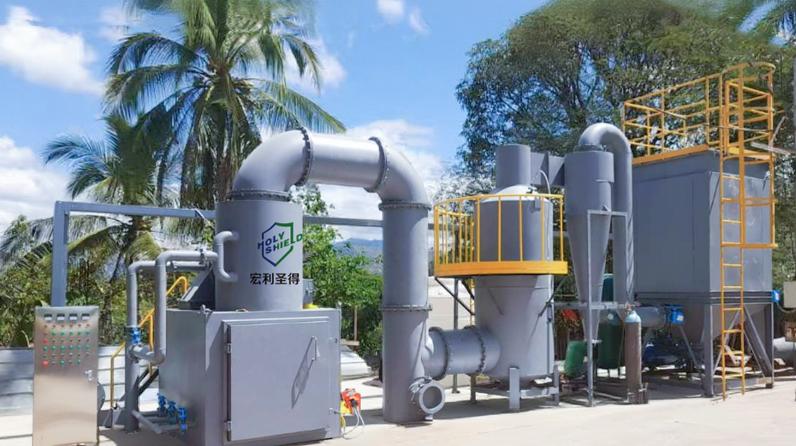
Domestic waste incineration projects must comply with local environmental and planning requirements, including site selection, environmental impact assessment and any necessary permits.
Equipment selection should account for site elevation, climate, daily waste generation, waste composition and moisture content. Local fuel and electricity supplies, access for maintenance, and arrangements for residue disposal must also be assessed. A site-specific design is essential to achieving reliable treatment performance and manageable operating costs.
For cold, high-altitude and geographically dispersed locations, large centralized waste treatment facilities may involve substantial construction and transport costs.
Where local conditions support its use, small-scale incineration can provide a practical option for decentralized waste reduction and environmentally sound treatment. With appropriate equipment selection, emissions control and operating management, this approach can support domestic waste management in remote villages, scenic areas, camps and overseas project sites while balancing environmental protection and operating costs.
Our Location:Hengliu Road, Economic
Development Zone, Zhucheng, Weifang, China
Mail Address:holyshield888@gmail.com


